What is Planning Permission for a House Renovation?
- sarah burrows

- Mar 5, 2025
- 3 min read
Updated: Mar 17, 2025
Planning permission is the formal approval from your local authority that allows you to carry out certain types of building work or development for residential and commercial properties. It ensures that proposed changes to buildings and land use comply with local planning policies, environmental considerations, and community impact.
When Do You Need Planning Permission for your residential / commercial property?
You’ll typically need planning permission if you are:
🏡 Building a new property
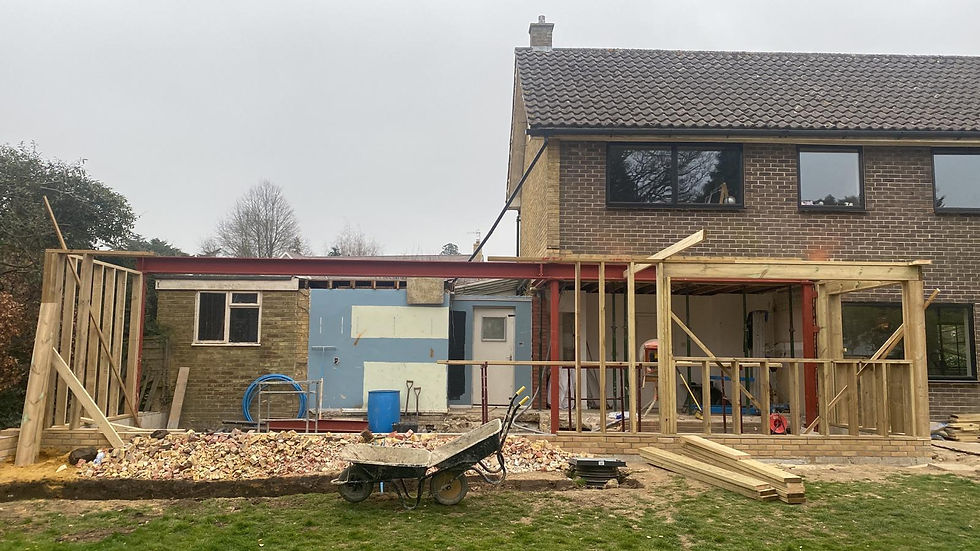
🏰 Making major alterations to an existing building (e.g., extensions, adding extra floors)
🔄 Changing the use of a building (e.g., converting a house into flats)
🏻 Developing land (e.g., building multiple homes or commercial spaces)
When Might You Not Need It?
Some smaller projects fall under Permitted Development (PD) rights, meaning you can proceed without full planning permission. These include:
✅ Small single-storey extensions (within size limits)
✅ Certain loft conversions & outbuildings
✅ Internal alterations
✅ Some changes in property use

Always check with your builder or local council before proceeding.
How to Apply for Planning Permission?
Submit an application to your local planning authority (LPA) via the Planning Portal.
Provide detailed plans, drawings, and supporting documents.
Wait for the consultation period (usually 8–13 weeks for a decision).
If approved, you can proceed! If rejected, you may appeal or adjust the plans.
Do not start any work before you get approval
This is a great time to source your suppliers while waiting for approval.
What If Your Planning Permission Is Not Approved?
If your planning permission is not approved, don’t worry—you still have options! Here’s what you can do next:
1. Review the Refusal Reasons
Your local planning authority (LPA) will provide a decision notice explaining why the application was rejected. Common reasons include:
🚫 Overdevelopment – The design is too large or out of scale with the area.
🏡 Impact on neighbors – Concerns about privacy, light, or overshadowing.
🌳 Environmental concerns – Impact on green spaces, trees, or wildlife.
🏰 Listed buildings & conservation areas – Strict rules on historic properties.
🚗 Highways & access issues – Parking or road safety concerns.

2. Make Minor Adjustments & Resubmit
If the refusal reasons are straightforward, you can revise the plans and submit a new application—sometimes for free if done within 12 months of the original submission. You may need to:
✅ Reduce the size or scale of the proposal
✅ Adjust the design to fit local guidelines
✅ Address concerns from neighbors or planning officers
3. Appeal the Decision
If you believe the decision was unfair, you can appeal to the Planning Inspectorate (in England) within 6 months of refusal. This process can take several months and is usually worth it only if you have strong grounds to challenge the decision.
4. Consider Permitted Development (PD) Rights
Some changes might be possible without full planning permission under Permitted Development (PD) rights. For example:
🏡 Smaller extensions may not need permission.
🔄 Internal layout changes are usually allowed.
🏰 Outbuildings within certain size limits can often be built under PD.
Need Help?
If you’re working on a renovation or interior project in Tunbridge Wells, Kent, or London, I can guide you through the design process and help navigate planning challenges! DM me to chat. 😊
Useful Contact Information
If you’re seeking planning permission in Tunbridge Wells, you’ll need to contact the Tunbridge Wells Borough Council’s Planning Department. Here are their details:
Address:Tunbridge Wells Borough CouncilTown HallMount Pleasant RoadRoyal Tunbridge WellsKentTN1 1RS
Telephone: 01892 526 121
If you have specific questions or need assistance with your application, the Planning Support team is available to help.
Before proceeding, it’s advisable to consult the council’s guidelines on what permissions you might need for your project.
Ensuring you have the correct permissions in place is crucial for the success of your development plans.


Comments